
Analytical services · Worldwide shipping · Helsinki
What does your product need to be tested for?
Tell us what you make. You put the sample in a box, and we do the rest.
Testing by product
What do you want to measure?
Choose your product. Each page lists the packages for it, with prices.
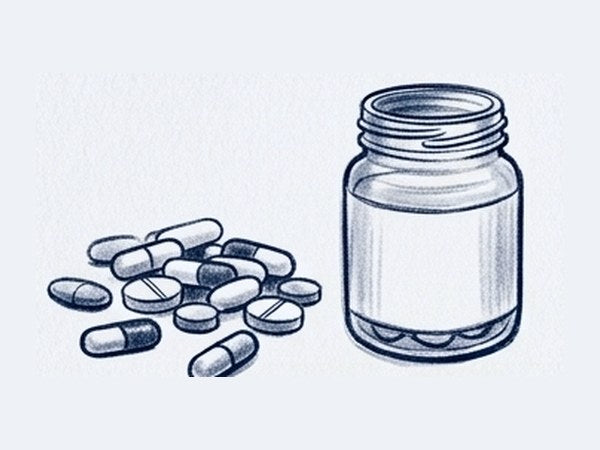
Supplements and multivitamins
Capsules, tablets, powders, protein, collagen, creatine, single nutrients.

Botanicals, herbs and spices
Dried herbs, spices, ayurvedic material, adaptogens, tinctures, teas and infusions.

Superfoods and powders
Green powders, cacao and cocoa, berry powders, blends, single-ingredient powders.

Mushrooms and mushroom extracts
Lion's mane, reishi, chaga, cordyceps, turkey tail — powders, extracts and blends.

Seaweed, algae and aquatic biomass
Sea moss, kelp, dulse, nori, wakame, spirulina, chlorella.
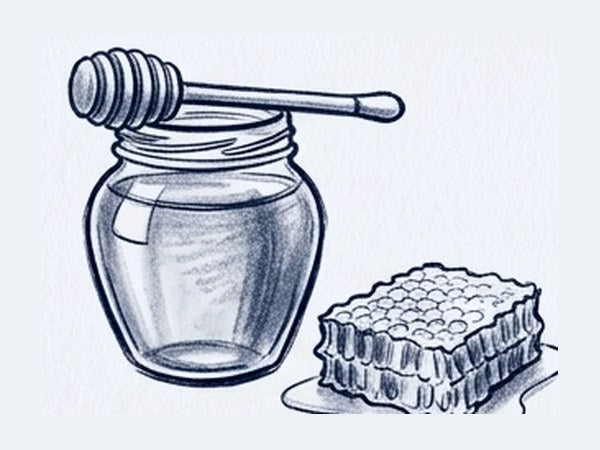
Honey and bee products
Honey, comb honey, propolis, pollen and royal jelly.

Wine, beer and juices
Wine, cider, beer, spirits, fruit and vegetable juices, soft and energy drinks.

Cosmetics and personal care
Creams, lotions, serums, balms, shampoos, shower gels and soaps — leave-on and rinse-off products.
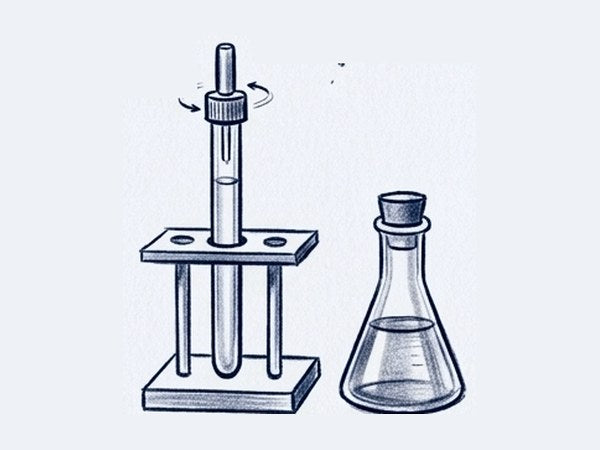
Chemicals — NMR analysis
Purity, identity, residual solvent and structure elucidation. Written for chemists. 1H, 13C, 19F, 31P, 11B.
Not on the list? Tell us what you make and what you have been asked for. If we can do it, we will quote it; if we cannot, we will say so.
Why order from us
One place to measure, one report
Whatever combination you order comes back as a single combined report, not a folder of certificates from different laboratories.
Analyses performed under ISO/IEC 17025 accreditation in the European Union or equivalent
We select the method so that its reporting limit sits below the legal limit your product is measured against. Where no method can reach the limit, we tell you before you order, not after.
Built around your product, not your size
A one-person brand and a company with a quality department get the same service, the same published price and the same report. No account, no minimum, no company required.
The shipping is arranged for you
Prepaid UPS label both ways, customs paperwork included, anywhere UPS operates. You put the units in a box, attach the label and drop it at your nearest UPS point. Nothing else.
Customs and paperwork are ours
Export declaration, commercial invoice, HS codes, clearance — prepared by us and sent with the label. You pay nothing at the border.
Every result read against the limit that applies to your product
The maximum level of the market you name — the EU by default, or the UK — or your own label claim, with the row named, so the assessment can be checked rather than taken on trust.
You know the reporting limit and uncertainty before you order
And you see them on the report — not a bare number. You can tell how close to the limit the result really sits.
Reviewed and signed by a chemist
With direct access to that chemist for any question on a result.
Each result e-mailed as soon as it is available
Ahead of the complete report, so you are not waiting on the slowest determination.
Wherever you sell
The accreditation is recognised in the UK, EU, United States, Canada, Australia, Japan and over a hundred other economies. For markets that set limits per daily dose, the report gives the calculated daily intake beside each concentration.
Pay in your own currency by ordinary bank transfer
For most major currencies we hold local account details, so it leaves your bank as a domestic transfer. No checkout, no card, no account. Purchase orders accepted.
Confidential
Your samples are processed under an internal reference, never under your name or the product's brand. The results, and the fact that the analysis was ordered, are yours.
How it works
Tell us what you make, using the form at the end of this page.
We confirm the product category, the limit that applies to it, and the quantity to send, then issue a pro-forma invoice.
You pay by bank transfer.
We send the UPS label and the customs paperwork. You pack the samples and hand the parcel over at your nearest UPS point.
Each result reaches you as soon as it is available, and the combined report when the last one is in. In most cases the turnaround is three to four weeks from the day the laboratory receives your sample, transit not included; we confirm it when the laboratory booking is made, and the report date once your samples have arrived.
Shipping and customs
Wherever you are, the paperwork is ours.
We ship from anywhere UPS operates. Chile, Taiwan, New Zealand, Canada — distance is rarely the obstacle; paperwork is. Export declarations, commercial invoices, HS codes, customs clearance: we prepare all of it and send it to you with the label.
You print the label, pack the sealed units, and hand the box over at your nearest UPS point. Nothing else.
How many units to send, and where in the batch they should come from, goes out with your shipping instructions. See how to pack and ship your sample.
The one exception: countries under EU sanctions or export restrictions.
Who this is for
Too small for the established testing houses?
The service is open to everyone — companies of any size, institutions, private individuals. It is especially suited to small producers, micro-brands and importers: anyone with a product on a shelf and no accreditation department behind them.
The established testing houses
Annual contracts and minimum volumes.
Portals, account managers, onboarding.
A price list written for manufacturers, and a bare number back.
This service
No annual contract, no company required.
A chemist who listens to your needs and helps you work out what to measure, and explains what the report says once it is in.
A price written for your product, and a report that reads the result against the limit that applies to it.
The report
What you receive
One combined report for everything you ordered, reviewed and signed by a chemist.
Each result with its unit — mg/kg, CFU/g, per capsule, whichever applies.
The limit it is measured against, with the regulation row named — or your own label claim.
The method, reporting limit, measurement uncertainty and accreditation status of each analysis — as stated on your quotation, before you ordered.
If a result is so close to the limit that the uncertainty covers it, the report says so, rather than calling it a pass or a fail.
Values you can use in a product specification, a distributor's file, a marketplace listing or a regulatory submission.
Customers outside the EU receive the same report; it names the reference framework it measures against.
Outside the EU
Reading this report outside the EU
The analyses are performed at institutes accredited to ISO/IEC 17025 in the European Union. Whether a particular determination falls within that scope is on your quotation, before you order. The accreditation is recognised internationally — in the United Kingdom, the EU, the United States, Canada, Australia, Japan and over one hundred other economies under the Global ACI arrangement (formerly ILAC) — so the figures and values of the report serve for a customer specification, a distributor's requirement or a regulatory limit in your market. Name the market on the form: where it publishes a limit, the report reads the result against it and states the limit beside the result; where it publishes none, the report says so.
Selling in a market that sets limits per daily dose — the United States, Canada, Australia? The conversion starts from the numbers in the report: concentration (mg/kg) × your declared daily dose = daily intake, compared with the µg/day limit that applies to you. State your declared daily dose on the form and the report includes the calculated daily intake beside each concentration.
Pricing
What does it cost?
Every price includes
Shipping and customs, in both directions.
Sample preparation and every determination ordered.
The combined report, every result read against the limit that applies.
Handling & shipping, charged once per shipment, however many samples it contains: EUR 80 EU, UK and EFTA · EUR 150 rest of world.
Package prices are per sample and are listed on each product page above.
The published price is all-inclusive: analysis, shipping in both directions, customs handling and the report. Nothing is added at any stage. VAT applies as set out below. If we cannot run your sample, the analysis price is refunded; the shipping fee is spent by then.
VAT
EU businesses with a valid, VIES-verifiable VAT number — reverse charge, 0% VAT.
Finnish customers and EU consumers — VAT added at 25.5%.
Customers outside the EU — no VAT.
Invoicing and payment
Paying us costs you nothing extra.
We confirm your category and quantity, then send a pro-forma invoice. Payment is an ordinary bank transfer, in your own currency — no checkout, no card, no account.
Pay in your own currency
EUR, USD, GBP, CHF, SEK, NOK, DKK, CAD, AUD, NZD, JPY and other major currencies. Tell us which one on the form. If you do not, we invoice in EUR.
A local transfer, not an international wire
For most major currencies we hold local account details, so your payment leaves your bank as a domestic transfer. No correspondent-bank charges, no card processor, no surcharge on your invoice.
Purchase orders accepted
Send us your PO reference and we raise the pro-forma invoice against it. Nothing to register, no account to create.
Analysis is supplied against payment in advance; we issue no shipping label before payment has cleared. Prices are held for 30 days from the date of the pro-forma invoice, at the exchange rate fixed on that invoice. All prices exclude VAT and are applied as set out above.
What we cannot accept
Nothing unlawful.
The sample is consumed by the analysis and is not returned.
If you are unsure whether your product qualifies, ask before shipping.
Confidentiality
Everything you send is used for your analysis and for nothing else — never shared, never sold. At the laboratory your sample is identified by an internal reference only, never by your name or the product's brand. Records are held in confidence and deleted once no longer needed.
Request testing
Tell us what you make.
Complete the form. We reply within a working day to confirm the product category, the limit that applies and how many units to send; the pro-forma invoice follows within two to three working days. Nothing is charged now.