NorrChemica™
Orcein (Synthetic)
Orcein (Synthetic) | CAS 1400-62-0 | E1%1cm ≥ 295 (MeOH, 579–583 nm)
Couldn't load pickup availability
Technical Specifications
| CAS Number | 1400-62-0 |
| EC / EINECS Number | 215-750-6 |
| MDL Number | MFCD00062310 |
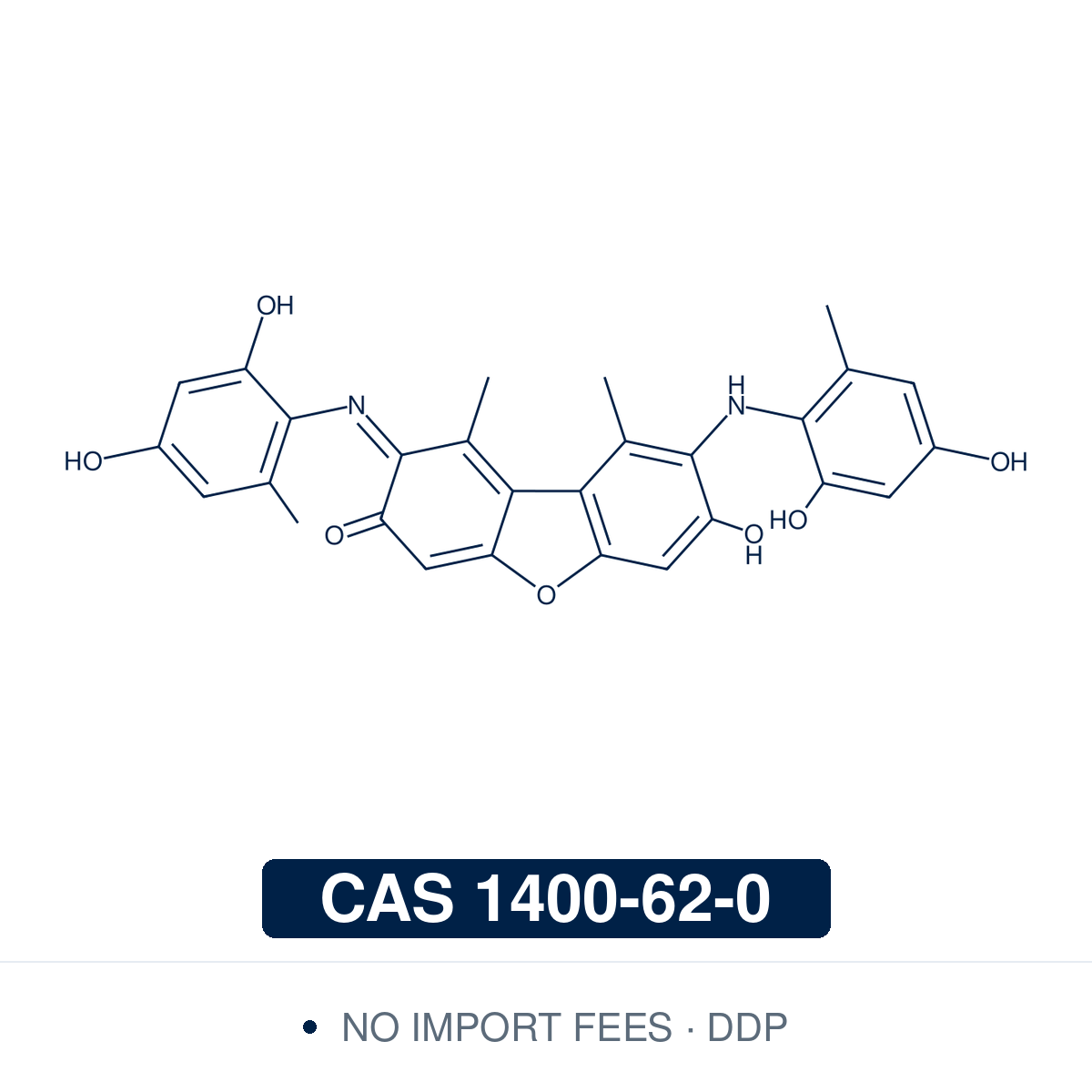
| SMILES | CC1=CC(=CC(=C1NC2=C(C3=C(C=C2O)OC4=CC(=O)C(=NC5=C(C=C(C=C5C)O)O)C(=C43)C)C)O)O |
| InChI | InChI=1S/C28H24N2O7/c1-11-5-15(31)7-17(33)25(11)29-27-13(3)23-21(9-19(27)35)37-22-10-20(36)28(14(4)24(22)23)30-26-12(2)6-16(32)8-18(26)34/h5-10,29,31-35H,1-4H3 |
| InChIKey | QFIIYGZAUXVPSZ-UHFFFAOYSA-N |
| PubChem CID | 72685 |
| Molecular Formula | C₂₈H₂₄N₂O₇ |
| Molecular Weight | 500.5 g/mol |
| Solubility | Variable by batch and pH. Practically insoluble to sparingly soluble in water; soluble in ethanol (0.1–4%) |
| Purity | Synthetic. Drying loss: ≤25%. Absorbance (E1%1cm) ≥ 295 (MeOH, 579–584 nm). |
| Physical Form | Reddish-brown powder |
| HS Code | 3204.19 |
| Shelf Life | Retest period: 36 months from date of manufacture |
| Storage Conditions | Store in a cool, dry place in a tightly sealed container |
Product Description & Scientific Applications
Orcein is a phenoxazone dye, a mixture of amino- and hydroxyphenoxazone chromophores resolved chromatographically into fourteen components. Its natural form, orchil, is a lichen-derived purple dye used since the sixth century, and the synthetic dye supplied here is applied as a histological stain.
Elastic-tissue staining. Orcein is a long-established elastic-fibre stain. Applied from acidified alcohol in the Taenzer–Unna method, it stains elastic fibres selectively within the tissue section. Comparative dye trials implicate the aminophenoxazone chromophore in this elastin affinity.
Hepatitis B surface antigen. In Shikata's orcein method the dye demonstrates hepatitis B surface antigen as cytoplasmic inclusions in paraffin sections of liver, staining hepatocyte cytoplasm but not nuclei, including the ground-glass hepatocytes of carriers. The method is specific and inexpensive and develops the inclusions even in stored, formalin-fixed, or autolysed material, which has made it a routine histochemical stain for the antigen.
Copper-associated protein. The same Shikata method stains a copper-associated protein in hepatocyte cytoplasm in long-standing cholestatic liver disease. The orcein-positive granules are rich in protein and sulphydryl groups and co-localise with dedicated copper stains such as rubeanic acid, marking the accumulated copper-binding protein.
Chromosome counts and ploidy. Dissolved in acidified solution as aceto-orcein, the dye stains chromosomes in squash preparations, supporting rapid chromosome counts and ploidy determination.
Polytene chromosome banding. The same aceto-orcein stains the giant salivary-gland chromosomes of Drosophila, resolving the banding pattern that marks individual chromosome regions for cytogenetic mapping.
Plant genotoxicity testing. In the Allium cepa assay, aceto-orcein squashes of root-tip meristems reveal the mitotic index, chromosomal aberrations, and micronuclei that score the genotoxicity of test agents and environmental samples.
Pollen viability. The stain also marks mature pollen, separating viable grains from aborted ones in fertility and plant-breeding assessment.
Historical dye analysis. In its natural form the dye colours textiles, parchments and illuminated manuscripts, and once stood in for Tyrian purple. Conservation scientists identify it on such objects by HPLC-MS, the orcein marker profile also distinguishing the lichen species of origin.
Shipping Destinations
- EU & UK: Priority delivery, 2–5 business days.
- United States (DDP): 3–7 business days, duties and taxes prepaid.
- EFTA Countries (DDP): 3–7 business days, duties and taxes prepaid.
- Worldwide: 7–14 business days, selected locations.
Safety Information
| Hazard Class | None — not subject to transport regulations |
| Transport Category | Not classified as dangerous goods for transport (ADR/IATA/IMDG) |
Documentation
| Safety Data Sheet | Download PDF |
Share